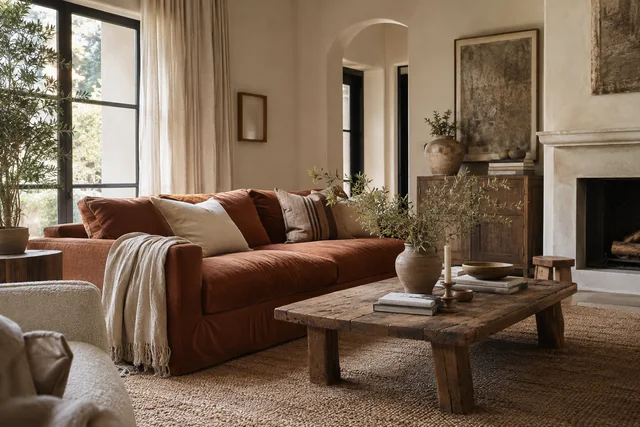
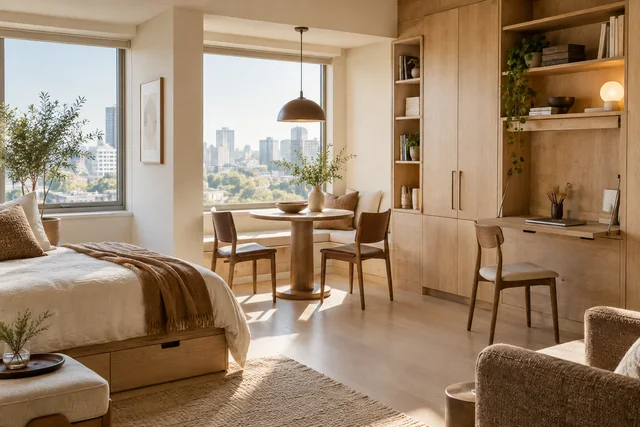
Build a palette from something you already love
A room palette becomes more personal when it starts with a real object: a painting, a textile, a wooden cabinet or a view through the window. The aim is to understand its relationships, not to reproduce every colour exactly.
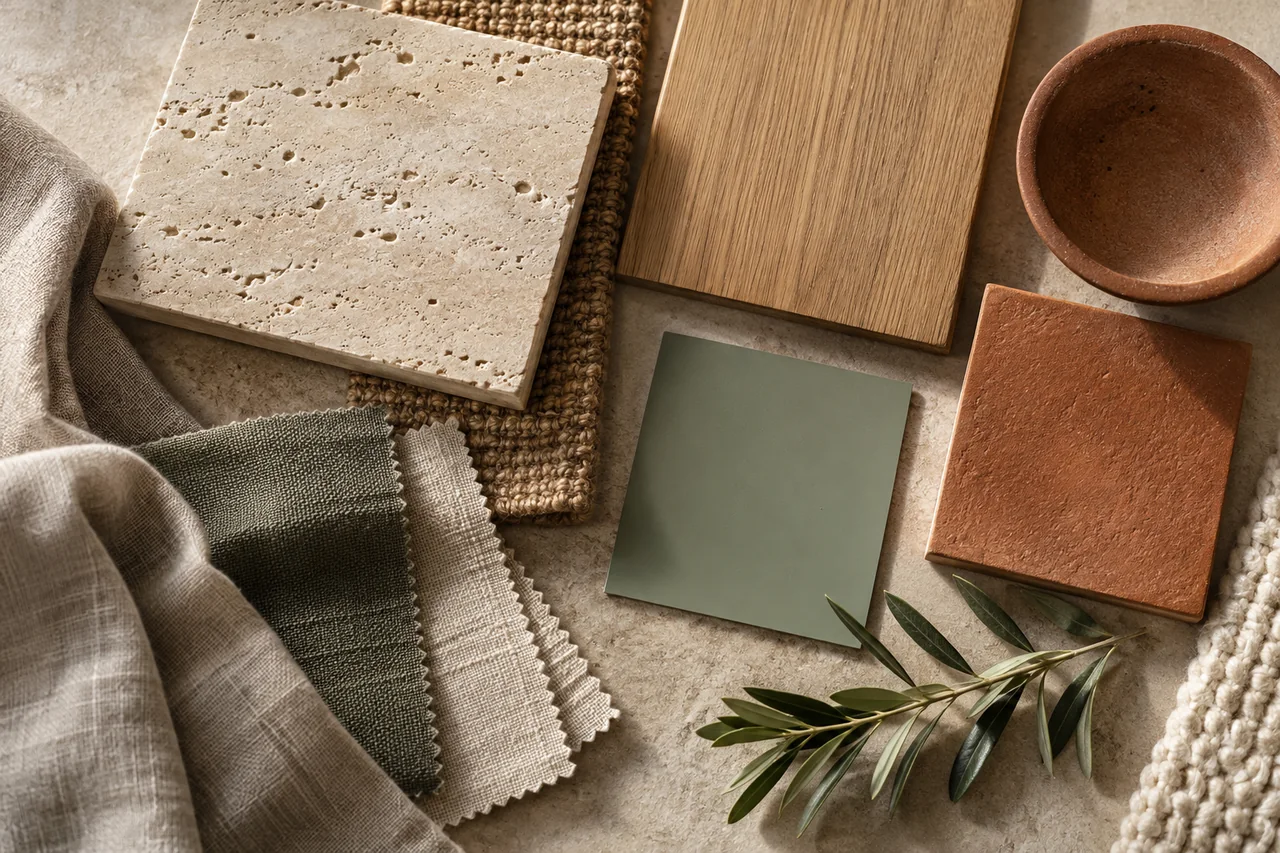
Identify the useful qualities
Notice whether the starting point feels warm, cool, soft, sharp, light or substantial. Choose a few qualities to carry into the room. A palette can share a sense of contrast or texture without matching every hue. This gives you a clearer basis for decisions than a folder of unrelated inspirational rooms.
Test in the actual light
View paint and material samples in the room at different times. Place them beside the surfaces that will remain, including floors and large furniture. Small samples are useful for narrowing options, but consider a larger test before committing to a whole wall or major piece. Screen colours are not a dependable final reference.
Allow a little difference
A palette needs enough variation to feel lived in. Use repetition where it helps the room connect, and leave room for objects with their own history. Record the chosen specifications and care requirements. The result should support the people using the space, rather than making every future purchase pass an unnecessarily rigid colour test.